Solar Hot Water Heaters 101
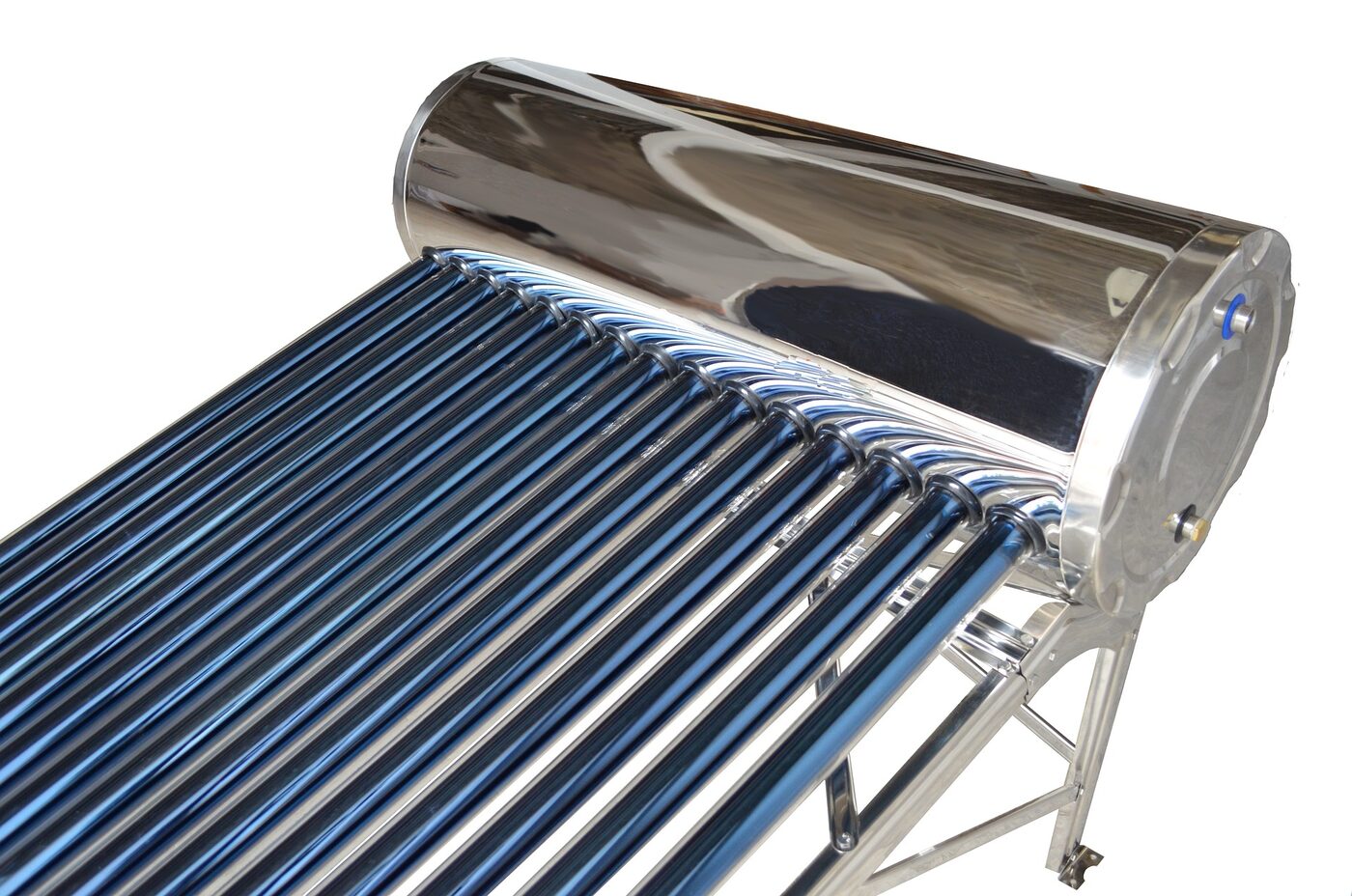
Solar water heaters convert sunlight to energy to heat your home’s water. If you are looking to upgrade your water heater, you might want to learn a bit more about solar options.
A benefit of the solar water heater is that it can completely eliminate your gas or electric bill which you incur for heating water. Additionally, they also cut down emissions of pollutants and provide you with hot water throughout the year. Solar water heaters are available in a number of designs and capacities.
The Basics of Solar Water Systems
All of them have a basic design which includes a storage tank for storing hot water and a collector that collects solar energy. The major components of a solar water heater include a storage tank, collectors, heat exchangers, controller system, and backup heaters.
1. Direct Systems
This system directs the flow of water through solar collectors. The water is heated in these collectors by solar heat. Next, the hot water is delivered to the tank for storage or used directly by people. This type of system is recommended for climates where water rarely freezes.
2. Indirect Systems
Indirect or closed-loop systems employ a non-freezing liquid for transferring heat from the sun and then to the water held in the storage tank. The sun’s energy provides heat to the fluid in the collectors. The fluid then goes through a heat exchanger which is installed in the storage tank. The exchanger transfers the heat energy to the water. These systems are more suitable in freezing temperatures.
3. Active Systems
Active systems use forced-circulation with the help of electric pumps supported by valves and flow controllers that force water to flow to the storage tank from the collectors. These systems are very common in the US.
4. Passive Systems
These systems do not require any pumps. Instead, Natural Convection causes water to becomes heavier as it is heated.
Collectors
Collectors are the solar panels that gather sunlight in order to convert it into heat energy. Solar radiation passes through the glass covering of the collector and hits the absorber plate which has a special coating designed for capturing the sun’s energy and converting it into heat energy.
Type of Collectors
1. Batch Collectors
Batch collectors are also known as ICS (integrated collector storage systems). It includes dark tubes or tanks fitted inside a box. This box is insulated to prevent heat loss. Water is heated inside the tubes or tanks which keep on storing it till it is drawn.
2. Flat-Plate Collectors
Flat-Plate Collectors consist of flat absorber plates to which copper tubes are fitted. They have a medium to high storage capacity which can hold up to forty gallons of hot water, enough for a family of four to six people. They are usually less expensive and are less efficient in colder climates.
3. Evacuated Tube Collectors
Evacuated tube collectors are considered to be highly efficient. The evacuated tubes are based on the same principle as that of a thermos. Vacuum is created between the two tubes to minimize loss of heat energy. This heating system can work well in extreme conditions and operate at temperatures of -40°F.
Heat Exchanger and Storage Tank
When the transfer fluid heats up in your collectors, the fluid moves into the heat exchanger which consists of a series of tubes/pipes. The heat exchanger is fitted inside your water storage tank. Hot water passes through the heat exchanger while the water inside your tank gets heated.
Controller System
The controller system is a part of all solar heating systems. It ensures that the temperature of the water does not get too high and is constantly collecting in the storage tank. It also stops cold water from flowing through the system when the atmospheric temperature is extremely cold.
Backup Heater
Every solar water heater is equipped with a backup system. If the weather is too cloudy and enough heat cannot be generated by harnessing solar energy, the backup heater shifts to using gas or electricity.
Final Word
You may not have really understood about solar water heaters before now. Knowledge is key to making great decisions in upgrading your home. Hot water provides a cost-effective energy source and an improved carbon footprint.